First visit? Access, reporting and
queue details: To be verified
Today: To be verified • Peak:
To be verified
Jyotirlinga No. 2
Mallikarjuna Jyotirlinga Temple
Srisailam on the
banks of the Krishna River in Andhra Pradesh
Deity: Lord Shiva as Mallikarjuna Jyotirlinga
Mallikarjuna Jyotirlinga Temple at Srisailam is revered as
Jyotirlinga No. 2, one of the 12 sacred Jyotirlingas of Lord
Shiva, and one of the major Shiva pilgrimage shrines in South
India.
The shrine stands on the banks of the Krishna River, is associated
with Bhramaramba Devi as one of the 18 Maha Shakti Peethas, and is
deeply revered for the union of Shiva and Parvati in the sacred
Srisailam kshetra.
Timings, access rules, route conditions and booking details: To be
verified.
Meaning of Mallikarjuna
Shiva and Parvati together
Mallika means Goddess Parvati,
Arjuna means Lord Shiva, and Mallikarjuna represents Shiva and
Parvati together.
Mallika = ParvatiArjuna = ShivaShiva & Parvati
together
Temple Status
To be verified
Temple opening status:
To be verified
Crowd Expectation
To be verified
Crowd guidance: To be
verified
Queue flow details: To be verified
Next Aarti
To be verified
Aarti details: To
be
verified
Best Darshan Window
To be verified
Preferred darshan window:
To be verified
Recommended
Route flow, darshan timing and access pattern should be
verified before travel.
Today: To be verified.
Map
Map
Temple Location Snapshot
Srisailam
on the banks of the Krishna River, Andhra Pradesh
Understanding the spiritual importance of Mallikarjuna
Jyotirlinga Temple
Jyotirlinga No. 2 and one of
the 12 sacred Jyotirlingas of Lord Shiva
Located at Srisailam on the
banks of the Krishna River in Andhra Pradesh
Also associated with
Bhramaramba Devi and counted among the 18 Maha Shakti
Peethas
East-facing temple with the
sacred Krishna River and Patal Ganga connection at
Srisailam
Mallikarjuna Jyotirlinga Temple is
one of the rare sacred temples where a Jyotirlinga and a Maha
Shakti Peetha are revered together. Bhramaramba Devi is
worshipped here as part of the sacred Srisailam identity, giving
the shrine a deeply revered place in Shiva and Shakti devotion.
Mallikarjuna Jyotirlinga Temple faces east. In Hindu tradition,
east-facing temples are considered highly auspicious because they
welcome the rising sun and symbolize positivity, purity,
prosperity, and divine energy.
The sacred story of Srisailam is closely tied
to Kartikeya, Lord Shiva and Goddess Parvati, whose presence sanctified
the hill shrine as Mallikarjuna Jyotirlinga.
According to legend, Kartikeya left
Mount Kailash after Ganesha was married first, and Shiva and Parvati came
to console him and stayed at Srisailam as Mallikarjuna.
Sacred legend
According to legend, Kartikeya became upset after his
brother Ganesha was married first. In his sorrow he left
Mount Kailash and stayed at Srisailam.
Shiva and Parvati came to console him and remained there as
Mallikarjuna. Through their presence, Srisailam became
sacred as Mallikarjuna Jyotirlinga and a deeply beloved
place of worship.
Central figures
Kartikeya, Shiva and Parvati
The legend brings together divine family devotion and the
sanctity of Srisailam.
Sacred outcome
Srisailam becomes Mallikarjuna
The site is revered as the place where Shiva and Parvati
stayed to console Kartikeya.
Temple History
Mallikarjuna Temple at Srisailam is one of
the oldest and most revered Shiva pilgrimage centers in South India. Its
long sacred history is tied to the hill shrine, the Krishna river valley
and many dynasties that supported the temple.
The shrine has inscriptional links to
early historic periods, with major additions and patronage associated with
later South Indian dynasties, especially Vijayanagara rulers.
Sacred timeline
Mallikarjuna Temple has long been revered as a major Shiva
shrine at Srisailam. The site carries inscriptional evidence
from early historic periods and remained important under
several South Indian dynasties.
The larger sacred identity of Srisailam comes from the
presence of both Mallikarjuna Jyotirlinga and Bhramaramba
Devi. That combined reverence helped sustain the temple as a
major pilgrimage destination across centuries.
Historic origins
2nd century CE origins
Early sacred history and inscriptional references are tied
to the site.
Major additions
Vijayanagara period
Later patronage helped shape much of the surviving temple
complex.
Temple Architecture & Design
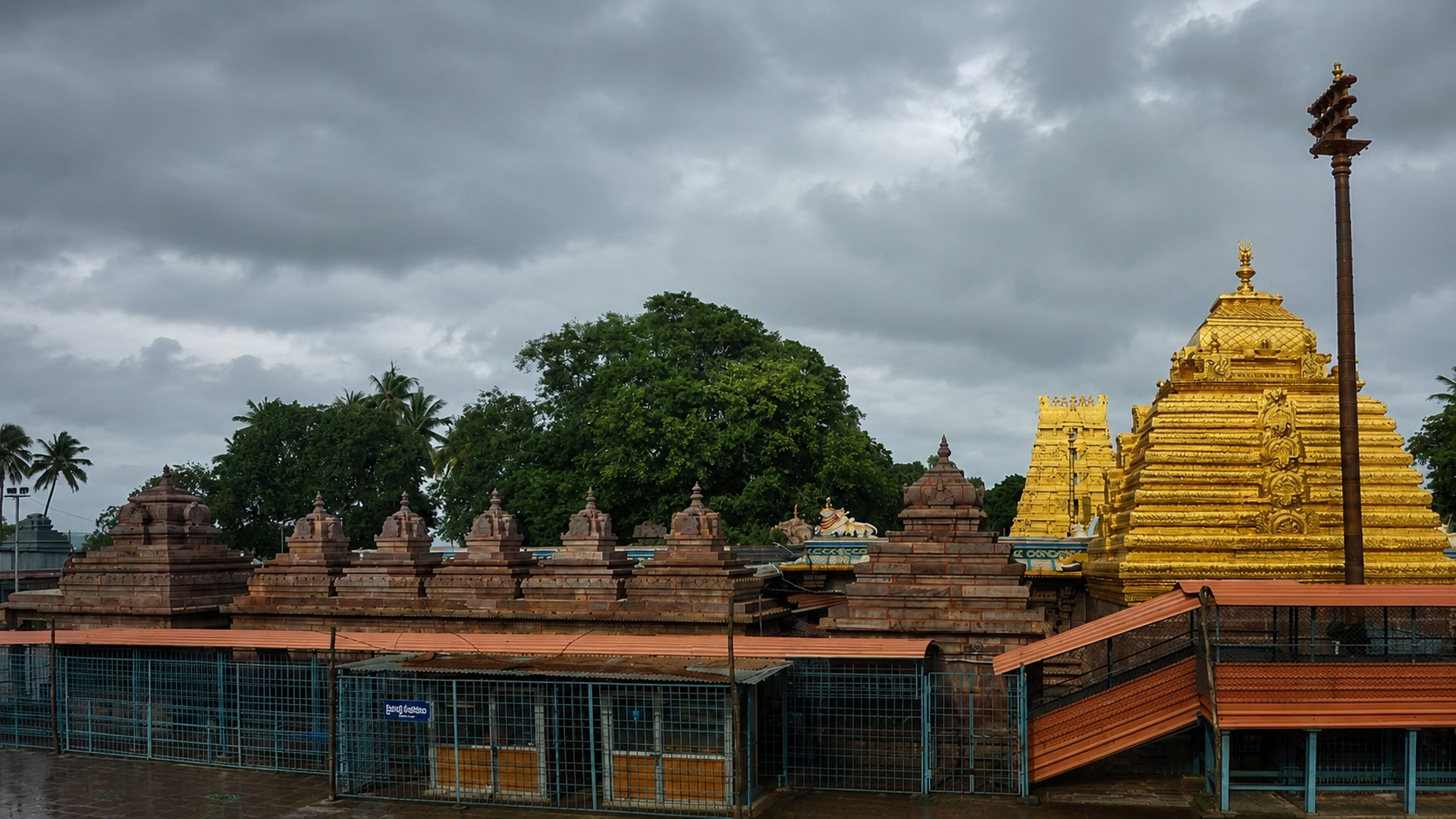
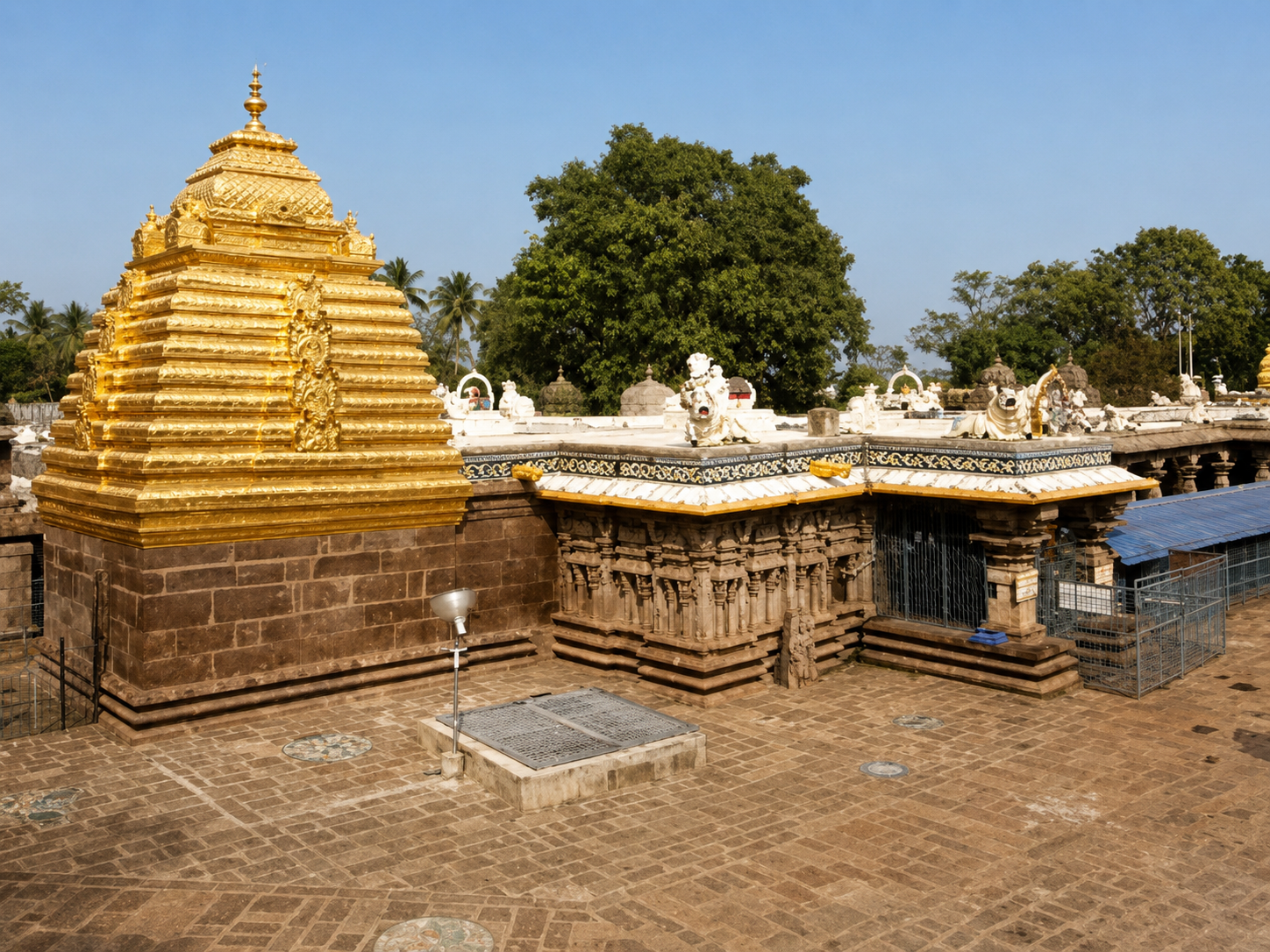
The Srisailam temple complex reflects
Dravidian architecture, with tall entrance towers, mandapas, sculpted
surfaces and enclosure elements that grew around the sacred core over
time.
Mallikarjuna Temple is generally
described as Dravidian in character, with gopurams, large pillared halls,
detailed sculptures and ancient inscriptions shaped further by later
Vijayanagara patronage.
Sacred design
The temple complex includes the main sanctum, mandapas,
tall entrance towers or gopurams, large pillared halls,
gateway structures and surrounding shrines that shape the
devotional movement of pilgrims through Srisailam.
Detailed sculptures and ancient inscriptions strengthen the
temple's sacred character, while the larger Nallamala hill
and Krishna River landscape gives Mallikarjuna Temple its
distinct spiritual atmosphere.
Architecture style
Dravidian architecture
South Indian temple design language with later additions and
expansion.
Design features
Gopurams, mandapas and inscriptions
Tall towers, detailed sculptures, pillared halls and ancient
inscriptions define the temple complex.
Spiritual Importance & Sacred
Features
Mallikarjuna is revered not only as a
Jyotirlinga, but also for its connection to Bhramaramba Devi, Patal
Ganga, the Nallamala Hills and a long Shaivite devotional tradition.
Patal Ganga is the sacred name of the
Krishna River near the temple, and Mallikarjuna is also honored as a
Paadal Petra Sthalam praised in ancient Tamil Shaivite hymns.
Sacred river and
devotion
Patal Ganga, also locally referred to as Pathala Ganga, is
the sacred name of the Krishna River near Mallikarjuna
Jyotirlinga. Devotees descend steps to reach the holy river
and collect its water for Abhishekam of the Shiva Linga.
Bathing in Patal Ganga is believed to cleanse sins, purify
the soul and bring spiritual blessings. The temple is also
honored as a Paadal Petra Sthalam, praised in ancient Tamil
devotional hymns by Shaivite saints known as Nayanmars,
highlighting its scriptural importance in Shaivism.
Rare
identity as both a Jyotirlinga and a Maha Shakti
Peetha
Deeply
associated with Bhramaramba Devi and the sacred Srisailam
identity
Set
within the Nallamala Hills with forests and the Krishna River
or Patal Ganga nearby
An
ancient Shiva temple with scriptural importance and long
devotional tradition
A
powerful spiritual place where devotees believe worship removes
fear, sins and negative karma
Honored
in Shaivite tradition as a Paadal Petra Sthalam
Sacred river
Patal Ganga
The Krishna River is approached as a holy water source for
bathing and Abhishekam.
Rare identity
Jyotirlinga & Maha Shakti Peetha
Mallikarjuna and Bhramaramba are revered together at one
sacred site.
Devotional recognition
Paadal Petra Sthalam
Praised in ancient Tamil hymns by Shaivite saints known as
Nayanmars.
Darshan Process
A quick visual flow from arrival to exit.
Average
total time: To be verified
Verify Before Visit
1
Reach Temple Area
Final drop point and
temple approach details: To be verified.
2
Security &
Screening
Phone, bag and
restricted-item rules: To be verified.
3
Join Queue Flow
Queue format, darshan
lane and access pattern: To be verified.
4
Move Through Temple
Access
Internal access path,
batch movement and reporting steps: To be verified.
5
Take Darshan
Follow current temple
staff guidance at the sanctum approach.
6
Follow Exit Flow
Exit route, re-entry
rules and nearby movement guidance: To be verified.
A simple 3-step journey to Mallikarjuna Temple,
Srisailam
1
Step 1
Reach Srisailam
Choose the most practical rail, air or road combination for
reaching Srisailam.
Air
Rajiv Gandhi International Airport, Hyderabad
Long onward road transfer
to Srisailam; exact travel duration: To be verified
Rail
Markapur Road railway station
Final rail-to-road transfer details: To be
verified
Road
Route access from Andhra Pradesh and Telangana
Highway, ghat-road and
bus details: To be verified
Final route,
transfer timing and hill-road conditions: To be verified.
2
Step 2
Local Transfer
Continue from the last major arrival point toward the Srisailam
temple area.
Taxi / Private Vehicle
Common transfer option
Exact convenience, parking and drop-point
details: To be verified
Bus Transfer
May be available depending on route
Schedule and boarding details: To be
verified
Travel Time
To be verified
Depends on origin, route conditions and traffic
Transfer, parking and final route handling:
To be verified.
3
Step 3
Final Temple Access
Reach the temple complex through the designated local access
route.
Final Approach
To be verified
Walking distance and last access point: To be
verified
Security Check
To be verified
Phone, bag and screening rules: To be verified
Local Assistance
To be verified
Any shuttle, porter or support service details: To be
verified
Queue, security
and temple-entry flow: To be verified.
Important Travel Note: Final route access, local transfer rules,
ghat-road conditions and temple-entry arrangements are To be verified. Check current
travel and temple guidance before visiting.
Check latest
timing, aarti access and crowd guidance before visit.
Verify Before Visit
Temple timing, aarti
schedule and access details: To be verified.
Temple StatusTo be verifiedDaily schedule and ritual access: To be
verified.
Current
GuidanceTo be verified
Next AartiTo be verifiedTo be verifiedBest Darshan WindowTo be verifiedTo be verifiedCrowd ExpectationTo be verifiedTo be verifiedTemple
ClosesTo be verifiedTo be verified
Daily
Entry
Temple Timings
Temple OpensTo be verified
Best Darshan WindowTo be verified
General DarshanTo be verified
Sensitive
Ritual WindowTo be verified
Temple
ClosesTo be verified
Main
Rituals
Aarti Schedule
Morning
AartiNextTo be verified
Abhishekam
/ ArchanaNextTo be verified
General
Aarti WindowNextTo be verified
Evening
AartiNextTo be verified
Temple
ClosesNextTo be verified
Temple timing, aarti schedule
and access details: To be verified.
Mallikarjuna is a major Shiva pilgrimage
destination, but special puja, aarti access, booking method,
reporting time and entry rules are To be verified.
Verify Before Visit
Aarti, abhishekam, special puja and
reporting details are To be verified, while Patal Ganga water remains
closely associated with Abhishekam devotion.
Common aarti access
Morning / Evening Aarti
These are the main ritual windows many devotees plan
around at Mallikarjuna Temple. Exact access and timing:
To be verified.
BookingTo be verified
Timing noteTo be verified
Advance suggestionTo be verified
Main Shiva puja
Rudrabhishekam / Abhishekam
This is one of the main puja categories devotees often
plan around. Devotees also associate Patal Ganga water
with Abhishekam, while current booking and reporting
details remain To be verified.
BookingTo be verified
Timing noteTo be verified
Advance suggestionTo be verified
Special ritual windows
General Aarti and Seva Access
Specific seva, aarti and ritual windows may be available,
but the current process and slot pattern are To be
verified.
BookingTo be verified
Timing noteTo be verified
Advance suggestionTo be verified
Longer ritual planning
Special Pujas and Sevas
Devotees planning a more elaborate ritual should confirm
the current procedure carefully because booking,
reporting and temple coordination can vary.
For most devotees, Mallikarjuna planning is
about both season and hill-route timing. Comfortable weather helps with
Srisailam travel, while daily darshan timing and crowd pattern are To be
verified.
Most balanced season
October to February
Cooler weather usually makes the broader Srisailam visit more
comfortable.
Spiritually intense period
Shravan and major Shiva festivals
Festival-period crowd and movement details: To be verified.
Best daily window
To be verified
Preferred daily darshan window: To be verified.
Nearby Temples & Spiritual Circuit
Important pilgrimage stops to visit around
Mallikarjuna Jyotirlinga Temple and the wider Srisailam spiritual
circuit
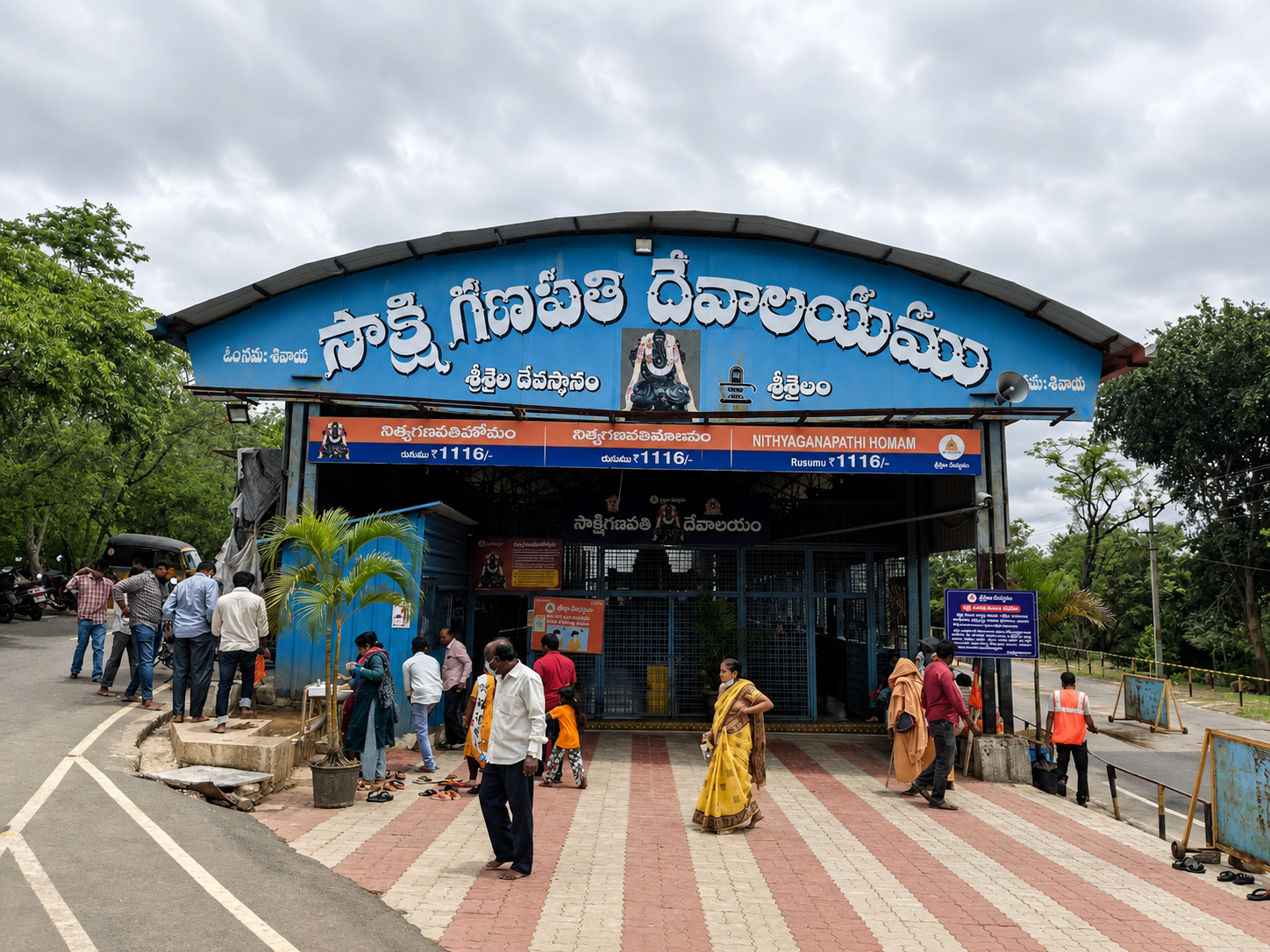
Sakshi Ganapati Temple
To be verified
Important sacred
stop included in the wider Srisailam pilgrimage
circuit.
Traditional offerings at Mallikarjuna
are simple, devotional and
closely tied to Shiva worship, with puja essentials and sacred rituals
usually arranged through trusted local vendors or approved temple
channels.
Flowers, bel patra and simple Shiva
puja items remain the most familiar offerings for devotees visiting
Mallikarjuna.
Flowers
Fresh flowers are among the most common devotional
offerings for Lord Shiva and are easily available
through trusted local vendors near the temple
approach.
Bel Patra
Bel patra remains one of the most symbolically
important
offerings in Shiva worship and is often part of
simple,
focused puja at Mallikarjuna.
Milk Abhishek
Milk-based abhishek offerings are widely associated
with
Shiva worship. Devotees should follow current temple
rules and approved puja procedures before bringing
items
inside.
Rudrabhishek
Rudrabhishek is one of the most sought-after temple
rituals for devotees seeking a deeper spiritual
offering
experience at Mallikarjuna.
Offering Preview
Active offering
Flowers
Active offering
Bel Patra
Active offering
Milk Abhishek
Active offering
Rudrabhishek
Before You Visit (Important Tips)
Short reminders that help avoid confusion
and keep darshan smoother.
Avoid These Mistakes
Mobile
phone entry rules: To be verified.
Aarti
slot timing and reporting cut-off: To be
verified.
Peak-hour
crowd pattern: To be verified.
Helpful Tips for Smooth Darshan
Preferred
arrival window for smoother darshan: To be
verified.
Keep
offerings ready before entry.
Follow
local queue instructions.
Before You Visit
A little planning before you leave for the
temple usually makes the
darshan experience calmer, especially when access and queue flow need
coordination.
Arrival checklist
Prepare these basics before entering the temple zone
Carry minimal
essentials so security checks and deposit needs stay
manageable.
Confirm the
latest darshan or aarti timing before you leave for
the temple.
Festival-day
crowd pattern and arrival buffer: To be
verified.
Queue
movement, checkpoint timing and the final temple
approach: To be verified.
Use
comfortable footwear for the walking approach and
city lanes.
Booking
confirmation, ID requirement and ritual-slot
verification process: To be verified.
Planning note
Plan for the full arrival flow, not just temple
timings
Travel time, route movement, security checks and queue
pauses: To be verified.
Dress Code & Allowed Items
Simple, respectful choices usually make the
visit smoother than trying
to manage extra items near a tightly monitored temple entry.
Modest clothing, light items and
simple offerings usually make entry, walking and security checks much
easier.
Clothing
Dress modestly and comfortably
Temple-appropriate clothing is the easiest choice for
darshan
lines, walking access and longer devotional visits.
Modest clothing
is
generally the safest option.
Choose easy,
comfortable clothing for walking and
waiting.
Restricted items
Check the current rules before you carry extras
Bag, phone, electronics and deposit rules can vary by
crowd
control setup, temple guidance and security
enforcement.
Confirm the
latest rules for bags, phones, electronics and
leather items.
Security and
deposit procedures may change with the
situation.
Offerings
Keep puja items simple and temple-appropriate
Simple offerings are easier to manage and more likely to
fit
current entry expectations near the temple complex.
Keep offerings
modest,
clean and appropriate for Shiva
worship.
Confirm
local
guidance if you plan to carry special ritual
items.
Accommodation Near Temple
Where you stay affects how easy an early
darshan day feels, especially
when route timing and local transfer planning become part of the plan.
Staying near the temple approach or
a practical transfer point usually makes early darshan planning much
smoother than depending on long local transfers.
Best area to stay
Choose a base that supports your darshan timing
If temple access is the priority, stay in an area that
keeps
the morning approach manageable instead of adding a long
transfer before the queue.
Near temple approach
Useful for walkable access to the shrine area
Staying close to the temple approach can make it easier
to combine darshan, local movement and other Srisailam
pilgrimage stops in one day.
Near railway station
Practical for shorter trips and easier transfers
This area can work better for visitors arriving by train,
carrying luggage or prioritizing simpler onward travel
over
a more immersive but slower local stay pattern.
Budget and comfort
Balance price, access and early-start convenience
Budget stays can work well if access is clear, while
comfort
stays are often worth considering when your visit
depends on
rest, early reporting or family travel.
Convenience note
Remote stays can be scenic but slower for arrival
Staying too far from the main temple approach may feel quieter,
but it can complicate luggage movement, local transfers and very
early temple starts.
Official Info & Booking Help
Use official confirmation for ritual
planning whenever your visit depends
on a specific booking, reporting time or access rule.
Use official sources first whenever
your visit depends on a puja slot, reporting window or paid ritual
booking.
Where to confirm
Start with official sources
For puja access, timing changes and reporting
instructions,
official guidance should be your first reference point.
Temple sourceCheck official
temple
source
Booking accessConfirm from
official booking portal
Special pujasUse official
helpdesk
guidance for ritual-specific support
Before you depend on a
booking
Verify the process before you travel
Reporting windows, entry rules and ritual availability
can
shift, so final confirmation matters even after you plan
the
trip.
Ritual processConfirm the
latest
booking method from the official source
Reporting timeCheck the current
reporting window before reaching the
temple
Third-party cautionAvoid
relying
only on unverified third-party booking
claims
Trust reminder
Use verified guidance when the visit depends on a paid
ritual
If your darshan day depends on a specific aarti or puja slot,
re-check official instructions shortly before travel rather than
depending only on older summaries or unofficial listings.
Temple Location
Use this location snapshot for last-mile
planning around the temple approach and your arrival route into Srisailam.
CitySrisailam
StateAndhra Pradesh
LandmarkSrisailam Temple Complex
Railway StationMarkapur Road railway station
AirportRajiv Gandhi International Airport, Hyderabad
AccessTemple-entry route and local access details: To be
verified.
Live Darshan Preview
Internal live accessOpen Divine Temple Guide live darshan for the active viewing
route.
Live darshan access
Live Temple Darshan
This sidebar card keeps live darshan discoverable on the temple page
while routing viewing access through the Divine Temple Guide live section.
Use the internal
live-darshan page for the next step.
Daily darshan timing and opening or closing schedule are To
be verified.
October to February is generally more comfortable for
Srisailam visits, but the preferred daily darshan window is To
be verified.
Official Srisailam Pratyaksha Seva guidance says devotees
should wear Hindu traditional wear and avoid modern clothes
or sleeveless dress.
Entry rules, phone restrictions, bag checks and current
security process are To be verified.
Aarti availability, access procedure and booking requirement
are To be verified.
Mobile phone and electronic-item rules are To be verified.
Locker or deposit facility availability is To be verified.
Average darshan duration is To be verified.
Official Srisailam Pratyaksha Seva guidance says online
booking is available. Devotees should report 15 minutes
before seva, carry a government ID and can book on the day
of seva up to one hour before the slot.