First visit? Entry, reporting, queue and route details: To be verified
Today: To be verified • Peak:
To be verified
Jyotirlinga No. 12
Grishneshwar Jyotirlinga Temple
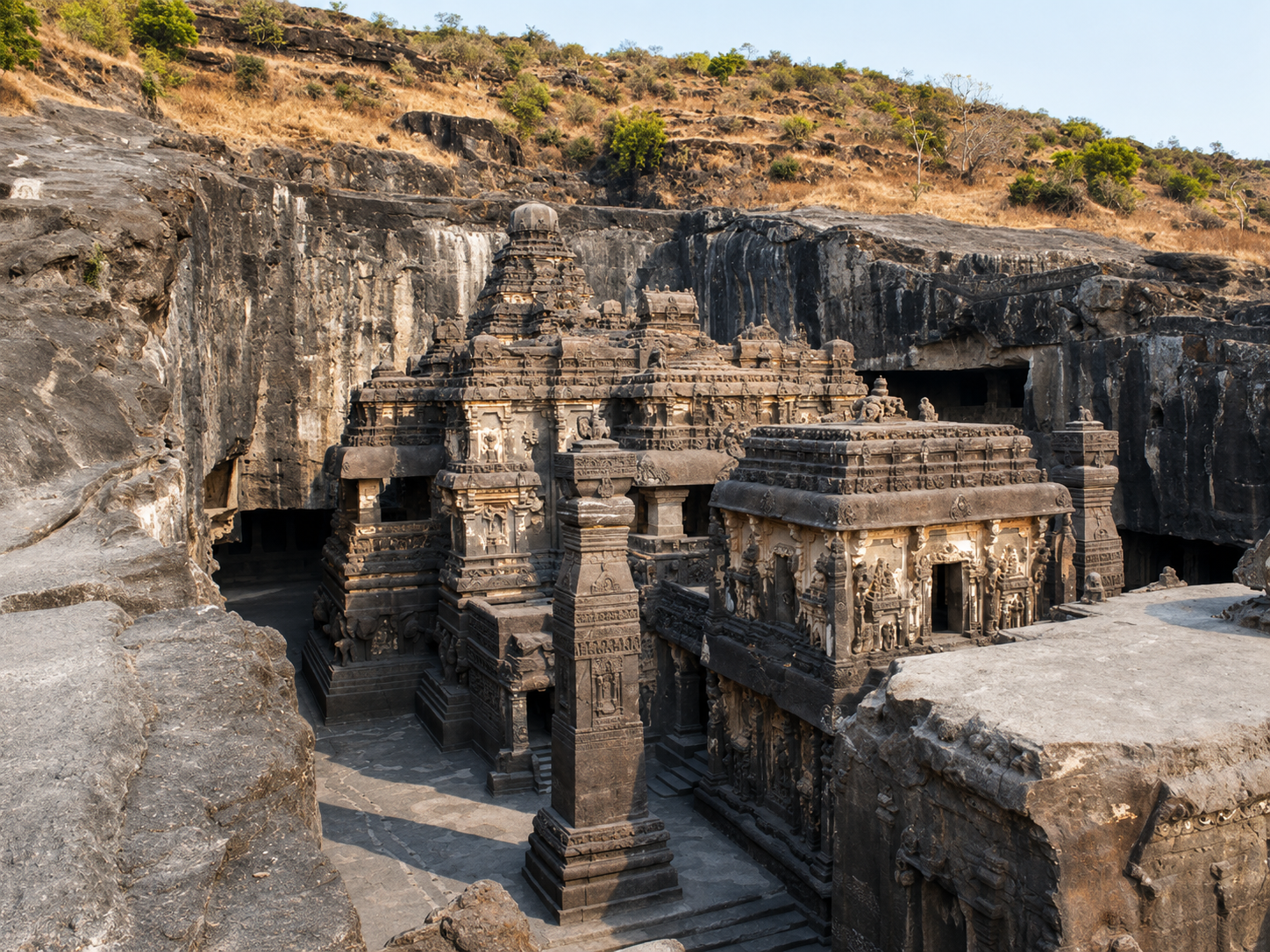
Near the famous Ellora Caves in Maharashtra
★Deity: Lord Shiva as Grishneshwar Jyotirlinga
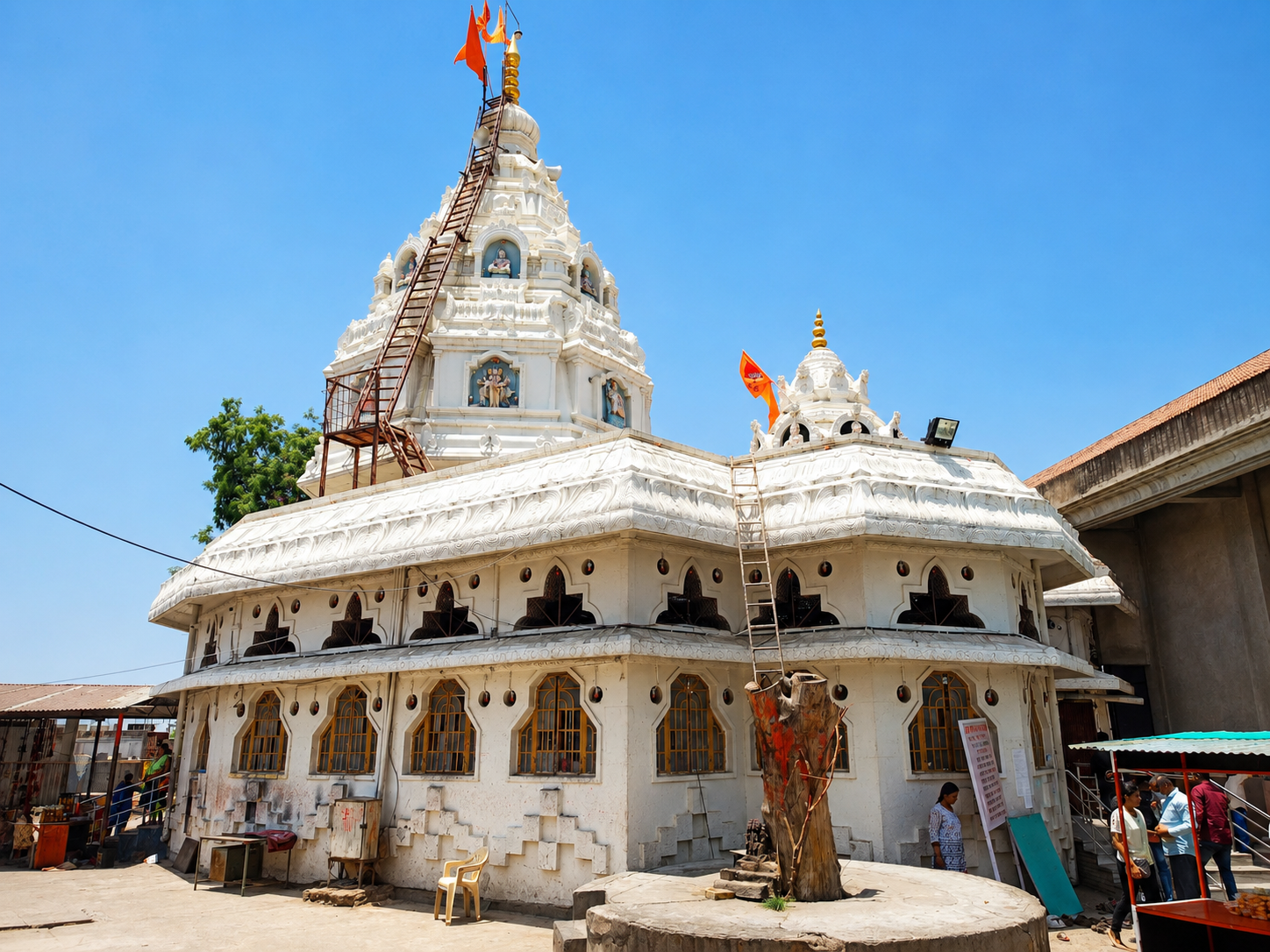
Grishneshwar Jyotirlinga Temple is one of the sacred 12
Jyotirlingas of Lord Shiva, revered as Jyotirlinga No. 12, the
twelfth and final Jyotirlinga among the sacred twelve, and is
located near the famous Ellora Caves in Maharashtra.
Also known as Ghushmeshwar and Ghrishneshwar, the temple is an
important center of Shaiva devotion and ancient heritage, famous
for red stone architecture, detailed carvings, peaceful spiritual
atmosphere, and the legend of deep devotion and forgiveness.
Grishneshwar Jyotirlinga Temple mainly faces east. East-facing
temples are traditionally considered auspicious because they
symbolize purity, positivity, and divine energy, and devotees
enter through beautifully carved gateways toward the sacred shrine.
Meaning of Grishneshwar
Lord of Ghushma’s Devotion
Grishna / Ghushma is connected
with the devoted woman Ghushma, Ishwar means Lord, and
Grishneshwar means Lord of Ghushma’s Devotion.
Understanding the spiritual importance of Grishneshwar Temple
Jyotirlinga No. 12 and the twelfth and final Jyotirlinga among the sacred twelve
Located near the famous Ellora Caves in Maharashtra, an important center of Shaiva devotion and ancient heritage
Famous for red stone architecture, detailed carvings, and a peaceful spiritual atmosphere
Mainly east-facing and associated with devotion, forgiveness, compassion, and divine grace
Grishneshwar Jyotirlinga Temple stands as a sacred shrine of devotion, forgiveness, and Shiva’s grace near Ellora.
Grishneshwar Jyotirlinga Temple is one of the sacred 12
Jyotirlingas of Lord Shiva and is regarded as the twelfth and final
Jyotirlinga. It is located near the famous Ellora Caves in
Maharashtra and is revered as an important center of Shaiva
devotion and ancient heritage.
The temple is famous for red stone architecture, detailed
carvings, peaceful spiritual atmosphere, and the legend of deep
devotion and forgiveness. Grishneshwar symbolizes faith,
compassion, and divine grace, and its east-facing identity is
associated with purity, positivity, and divine energy in Hindu
tradition.
Jyotirlinga No. 12Ellora CavesGhushma LegendEast-Facing TempleRed Stone Heritage
Grishneshwar Mythology and Ghushma Legend
Grishneshwar’s sacred identity is tied to Ghushma, who worshipped Lord Shiva daily, created and immersed 101 Shiva Lingams, continued her devotion without anger even after her son was killed and thrown into a lake, and received Shiva’s grace when he restored her son to life and appeared as Grishneshwar.
According to tradition, Ghushma worshipped Lord Shiva daily, created and immersed 101 Shiva Lingams, continued her devotion without anger after her son was killed and thrown into a lake, and Lord Shiva restored her son to life before appearing as Grishneshwar or Ghushmeshwar.
Sacred legend
According to legend, a devoted woman named Ghushma worshipped Lord Shiva daily. As part of her devotion, she created and immersed 101 Shiva Lingams, making her life a continuous act of faith and disciplined worship.
Out of jealousy, her son was killed and thrown into a lake by another family member. Even in that grief, Ghushma continued her devotion without anger or hatred, showing patience, surrender, and complete trust in Lord Shiva.
Pleased with her faith and patience, Lord Shiva restored her son to life and appeared before her as a Jyotirlinga. Shiva then became known as Grishneshwar or Ghushmeshwar, and the legend came to symbolize devotion, forgiveness, patience, and Shiva’s grace.
Ghushma
Devoted worshipper of Shiva
The sacred meaning of the temple is rooted in the unwavering devotion of Ghushma.
101 Shiva Lingams
Daily act of devotion
Ghushma’s regular worship through 101 Shiva Lingams defines the temple’s core legend.
Shiva’s grace
Son restored to life
The legend remembers Shiva restoring her son and revealing himself as the Grishneshwar Jyotirlinga.
Temple History
Grishneshwar has ancient origins, has been rebuilt several times over the centuries, and remains closely tied to the Shaiva pilgrimage heritage of Ellora and the wider sacred memory of Maharashtra.
The temple is remembered for ancient origins, repeated rebuilding after damage and invasions, and major 18th-century restoration associated with Ahilyabai Holkar.
Sacred timeline
The temple has ancient origins and has remained part of long-standing Hindu sacred memory in the Ellora region. Over the centuries, the shrine was rebuilt several times due to invasions and damage, yet its place in Shiva devotion continued without interruption.
The present structure was largely restored in the 18th century by Ahilyabai Holkar, whose patronage is closely connected with the survival and visible form of the temple that pilgrims revere today.
Grishneshwar became an important pilgrimage site for Shiva devotees and remains closely connected with the cultural heritage of Ellora, linking sacred worship with one of India’s great centers of ancient heritage.
Ancient origins
Old Shiva pilgrimage memory
The shrine is rooted in ancient Hindu tradition and long-standing Shaiva devotion near Ellora.
Major restoration
18th century and Ahilyabai Holkar
The present structure is strongly associated with 18th-century restoration by Ahilyabai Holkar.
Ellora heritage
Ancient cultural connection
The temple’s sacred importance is closely linked with the religious and cultural heritage of the Ellora region.
Temple Architecture & Design
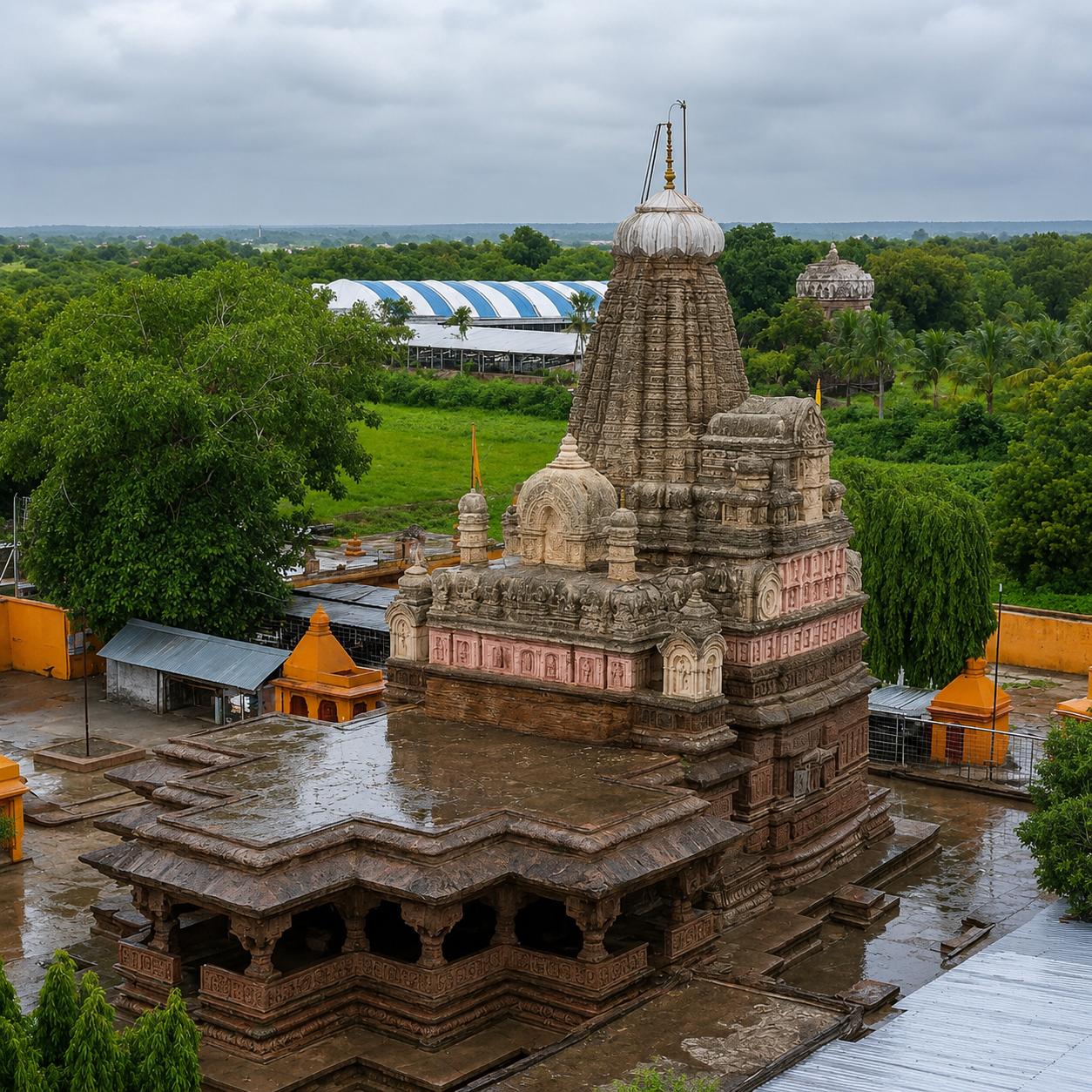
Grishneshwar is known for traditional South Indian and Maratha-style architecture, red basalt stone construction, and a carved temple form that combines medieval craftsmanship with spiritual simplicity.
The temple is especially recognized for red stone architecture, sculpted pillars, mandapas, intricate carvings, and an ancient sanctum housing the sacred Jyotirlinga.
Sacred design
Grishneshwar reflects traditional South Indian and Maratha-style architecture and is especially known for its red basalt stone construction. The temple’s reddish stone presence gives it a distinct visual identity among Jyotirlinga shrines in Maharashtra.
The sacred structure features beautiful carvings of gods, dancers, and mythological scenes, along with sculpted pillars and mandapas that shape the devotee experience. The ancient sanctum housing the Jyotirlinga remains the spiritual center of the temple.
Intricate temple walls and ceilings, combined with a disciplined layout and carved forms, create a blend of medieval craftsmanship and spiritual simplicity. This architectural identity supports both ritual movement and the serene atmosphere associated with the shrine.
Architecture style
South Indian and Maratha-style design
The temple blends traditional South Indian sacred form with Maratha-era architectural character.
Stone and carvings
Red basalt and sculpted detail
Red basalt stone, carved figures, pillars, mandapas, and intricate surfaces define the temple’s visual identity.
Sacred core
Ancient sanctum and Jyotirlinga
The ancient sanctum with the Jyotirlinga stands at the center of a disciplined yet spiritually intimate temple layout.
Spiritual Importance & Sacred Features
Grishneshwar is revered as the final Jyotirlinga, a shrine of patience, forgiveness, family harmony, and Shiva’s compassion, where devotees remember the grace shown to Ghushma.
Worship at Grishneshwar is believed to bring peace, family harmony, devotion, spiritual strength, forgiveness, patience, and blessings from Lord Shiva.
Sacred significance
Worship at Grishneshwar is believed to bring peace, family harmony, devotion, and spiritual strength. Devotees pray here for forgiveness, patience, protection, and blessings from Lord Shiva, and the shrine is revered as a place of pure devotion and divine grace.
The temple’s symbolism is deeply shaped by the Ghushma legend. For devotees, Grishneshwar represents unwavering faith, compassion, and the strength to remain devoted even in grief and hardship.
Grishneshwar is also remembered as the final Jyotirlinga, the shrine connected with Ellora Caves, the story of devotion and forgiveness, and the unique reddish stone temple form that reflects both heritage and simplicity.
Twelfth and final Jyotirlinga among the sacred twelve
Connection with Ellora Caves and ancient heritage
Story of devotion, forgiveness, patience, and Shiva’s grace
Ancient red stone temple with unique reddish structure and carvings
Symbol of compassion, divine blessings, and sincere Shiva devotion
Final Jyotirlinga
Twelfth and last among the sacred twelve
The shrine completes the sacred Jyotirlinga sequence and is revered with special devotional importance.
Devotion and forgiveness
Ghushma’s sacred example
The legend teaches patience, unwavering devotion, compassion, and trust in Shiva’s grace.
Spiritual blessing
Peace, family harmony, and strength
Devotees seek blessings for protection, forgiveness, devotion, and inner steadiness in life.
Darshan Process
A quick visual flow from entry point to
exit.
Average total time: To be verified
Verify Before Visit
1
Reach Temple Area
Final approach point
and walking path: To be verified.
2
Clear Security
Security checks,
restricted items and entry rules: To be verified.
3
Join Queue Lane
Queue lane and darshan
item guidance: To be verified.
4
Move Final Stretch
Final approach
movement near the shrine: To be verified.
5
Take Darshan
Darshan flow and
movement guidance: To be verified.
Daily crowd
pattern and the best darshan window should be verified before
travel.
Verify Before Visit
Current schedule details
should be verified.
Temple StatusTo be verifiedBased on current
time in IST and listed daily schedule.
Today's
TimingTo be verified
Next AartiTo be verifiedTo be verifiedBest Darshan WindowTo be verifiedLeast rush for
general darshanCrowd ExpectationTo be verifiedTo be verifiedTemple
ClosesTo be verifiedListed daily
closing time
Traditional offerings at Grishneshwar Temple
are simple, devotional and
closely tied to Shiva worship, with puja essentials and sacred rituals
usually arranged through trusted local vendors or approved temple
channels.
Flowers, bel patra and simple Shiva
puja items remain the most familiar offerings for devotees visiting
Verul.
Flowers
Fresh flowers are among the most common devotional
offerings for Lord Shiva and are easily available
through trusted local vendors near the temple
approach.
Bel Patra
Bel patra remains one of the most symbolically
important
offerings in Shiva worship and is often part of
simple,
focused puja at Verul.
Milk Abhishek
Milk-based abhishek offerings are widely associated
with
Shiva worship. Devotees should follow current temple
rules and approved puja procedures before bringing
items
inside.
Special puja
Special puja is one of the most sought-after temple
rituals for devotees seeking a deeper spiritual
offering
experience at Verul.
Offering Preview
Active offering
Flowers
Active offering
Bel Patra
Active offering
Milk Abhishek
Active offering
Special puja
Before You Visit (Important Tips)
Short reminders that help avoid confusion
and keep darshan smoother.
Avoid These Mistakes
Don't
carry mobile inside temple: To be verified.
Don't
come late for aarti slots: To be verified.
Avoid
peak hours if possible: To be verified.
Helpful Tips for Smooth Darshan
Reach
early morning for smooth darshan: To be verified.
Keep
offerings ready before entry: To be verified.
Follow
local queue instructions: To be verified.
Before You Visit
A little planning before you leave for the
temple usually makes the
darshan experience calmer, especially when route access, entry movement and ritual access need verification.
Arrival checklist
Prepare these basics before entering the temple zone
Carry minimal
essentials so security checks and deposit needs stay
manageable: To be verified.
Confirm the
latest darshan or aarti timing before you leave for
the temple: To be verified.
Festival-day
arrival guidance: To be verified.
Keep extra
buffer time for queue movement, checkpoints and
final approach access: To be verified.
Use
comfortable footwear for the walking approach and
city lanes: To be verified.
Keep booking
confirmation and ID guidance for ritual access: To
be verified.
Planning note
Plan for the full arrival flow, not just temple
timings
Travel time, route, security checks and final entry movement
should be verified before travel.
Dress Code & Allowed Items
Dress code, allowed items and deposit rules
should be verified before travel.
Dress guidance, item rules and
carrying restrictions should be verified before travel.
Clothing
Dress guidance: To be verified
Dress code and temple-appropriate clothing guidance
should be verified before travel.
Dress guidance:
To be verified.
Footwear
and waiting-area guidance: To be
verified.
Restricted items
Check the current rules before you carry extras
Bag, phone, electronics and deposit rules should be
verified before travel.
Bag, phone,
electronics and leather-item rules: To be
verified.
Security and
deposit procedures: To be verified.
Offerings
Keep puja items simple and temple-appropriate
Offering-entry guidance and current item expectations
should be verified before travel.
Offering guidance:
To be verified.
Special
ritual item guidance: To be verified.
Accommodation Near Temple
Where you stay affects how easy an early
darshan day feels, especially
when route access and transfer timing become part of the plan.
Staying near the temple precinct or a
practical transfer point usually makes early darshan planning much
smoother than depending on long city transfers.
Best area to stay
Choose a base that supports your darshan timing
If temple access is the priority, stay in an area that
keeps
the morning approach manageable instead of adding a long
transfer before the queue.
Temple precinct or local approach zone
Useful for temple-side access
Staying near the temple-side approach can
make
it easier to combine darshan, local movement and a
nearby stop
visit in one day.
Near railway station
Practical for shorter trips and easier transfers
This area can work better for visitors arriving by train,
carrying luggage or prioritizing simpler onward travel
over
walkable local access.
Budget and comfort
Balance price, access and early-start convenience
Budget stays can work well if access is clear, while
comfort
stays are often worth considering when your visit
depends on
rest, early reporting or family travel.
Convenience note
Remote stays can be scenic but slower for arrival
Staying too far from the temple approach may feel convenient for some routes,
but it can complicate luggage movement, auto drop-offs and very
early temple starts.
Official Info & Booking Help
Use official confirmation for ritual
planning whenever your visit depends
on a specific booking, reporting time or access rule.
Use official sources first whenever
your visit depends on a puja slot, reporting window or paid ritual
booking.
Where to confirm
Start with official sources
For puja access, timing changes and reporting
instructions,
official guidance should be your first reference point.
Temple sourceCheck official
temple
source
Booking accessConfirm from
official booking portal
Special pujasUse official
helpdesk
guidance for ritual-specific support
Before you depend on a
booking
Verify the process before you travel
Reporting windows, entry rules and ritual availability
can
shift, so final confirmation matters even after you plan
the
trip.
Ritual processConfirm the
latest
booking method from the official source
Reporting timeCheck the current
reporting window before reaching the
temple
Third-party cautionAvoid
relying
only on unverified third-party booking
claims
Trust reminder
Use verified guidance when the visit depends on a paid
ritual
If your darshan day depends on a specific aarti or puja slot,
re-check official instructions shortly before travel rather than
depending only on older summaries or unofficial listings.
Temple Location
Use this location snapshot for last-mile
planning around the temple precinct, approach and your arrival point.
CityVerul
StateMaharashtra
LandmarkNear the famous Ellora Caves
Railway StationChhatrapati Sambhajinagar railhead
AirportChhatrapati Sambhajinagar Airport
AccessTemple access, route and final entry sequence: To be verified.
Live Darshan Preview
Internal live accessOpen Divine Temple Guide live darshan for the active viewing
route.
Live darshan access
Live Temple Darshan
This sidebar card keeps live darshan discoverable on the temple page
while routing viewing access through the Divine Temple Guide live section.
Use the internal
live-darshan page for the next step.
Daily opening, closing, darshan and aarti timing details
should be verified before travel, especially if your visit
depends on a specific ritual window.
Seasonal comfort, crowd levels and preferred darshan window
should be verified before travel.
The district heritage page notes that men entering the
sanctum traditionally go bare-chested. Additional dress and
item rules should still be verified before travel.
Entry sequence, security rules, phone policy and allowed items should be verified before travel.
Aarti attendance, access procedure and any booking requirement should be verified before travel.
Mobile phone and electronic item rules should be verified before travel.
Locker or deposit facility availability should be verified before travel.
Darshan duration depends on crowd and queue flow and should be verified before travel.
Online pooja booking availability and process should be verified before travel.