First visit? Entry, reporting, queue and route details: To be verified
Today: To be verified • Peak:
To be verified
Jyotirlinga No. 8
Trimbakeshwar Jyotirlinga Temple
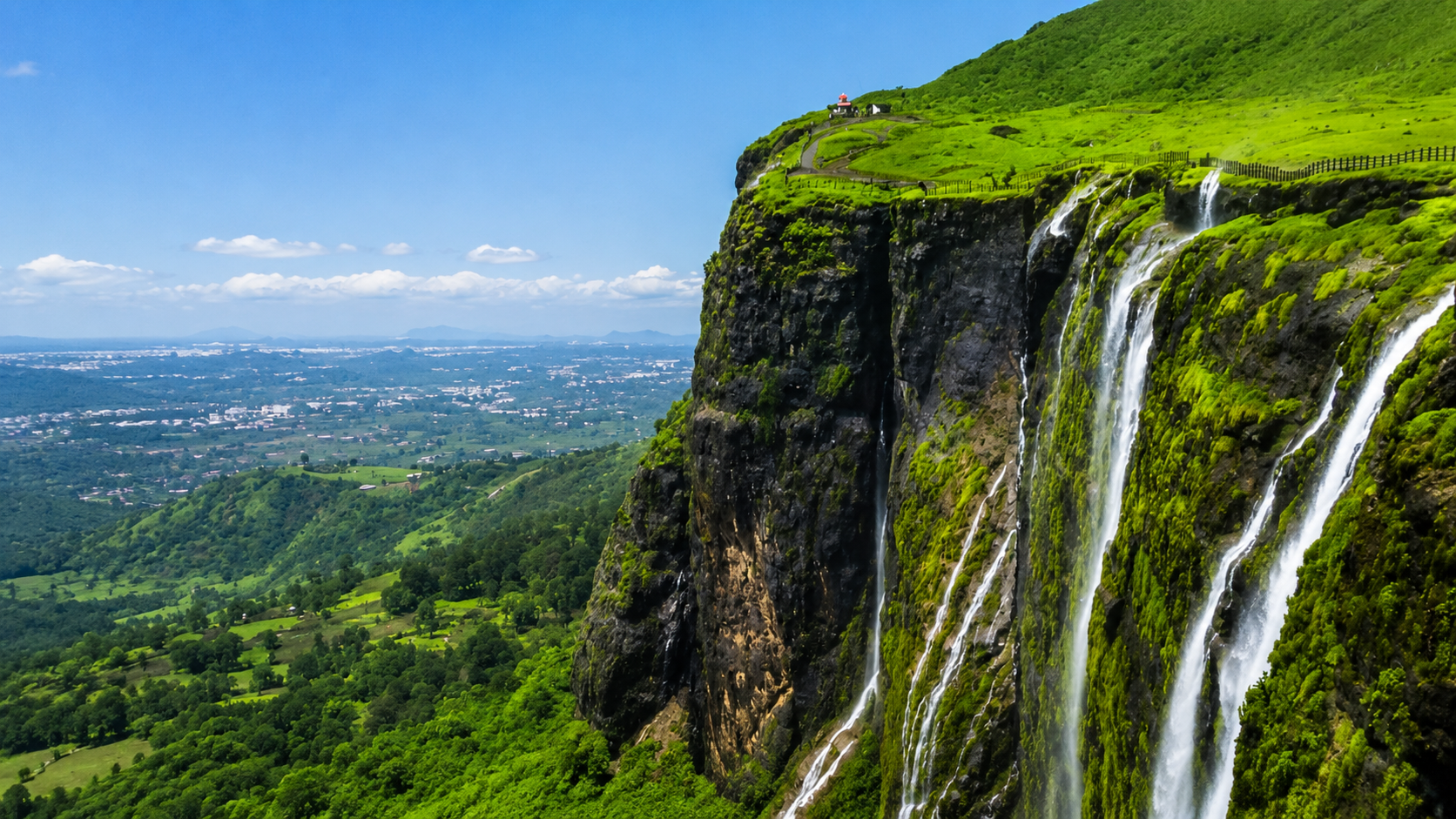
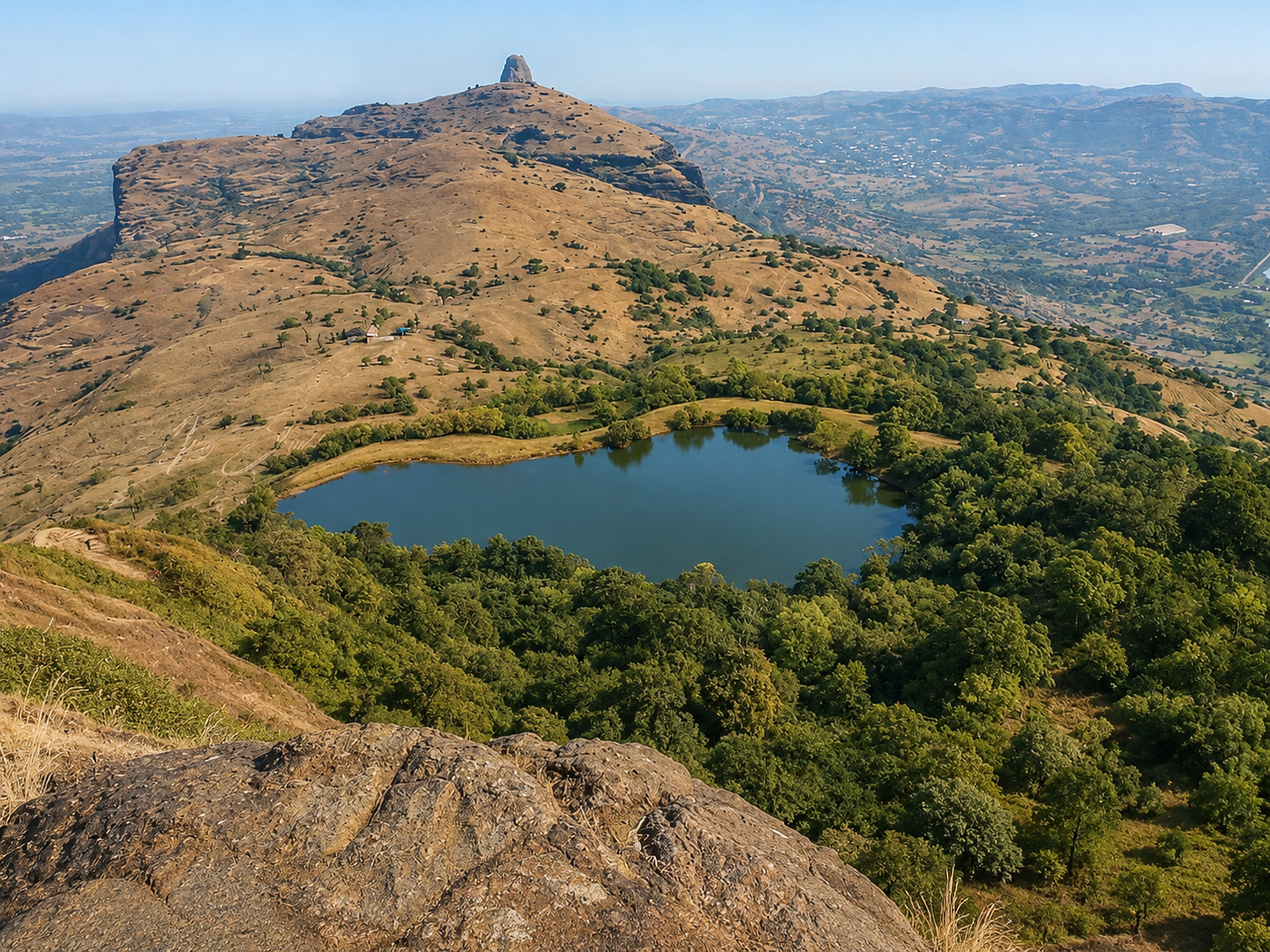
Near the Brahmagiri Hills in Maharashtra, close to the origin of the sacred Godavari River
★Deity: Lord Shiva as Trimbakeshwar Jyotirlinga
Trimbakeshwar Jyotirlinga Temple is revered as Jyotirlinga No. 8,
the eighth among the 12 Jyotirlingas of Lord Shiva, and stands
near the Brahmagiri Hills in Maharashtra close to the origin of the
sacred Godavari River.
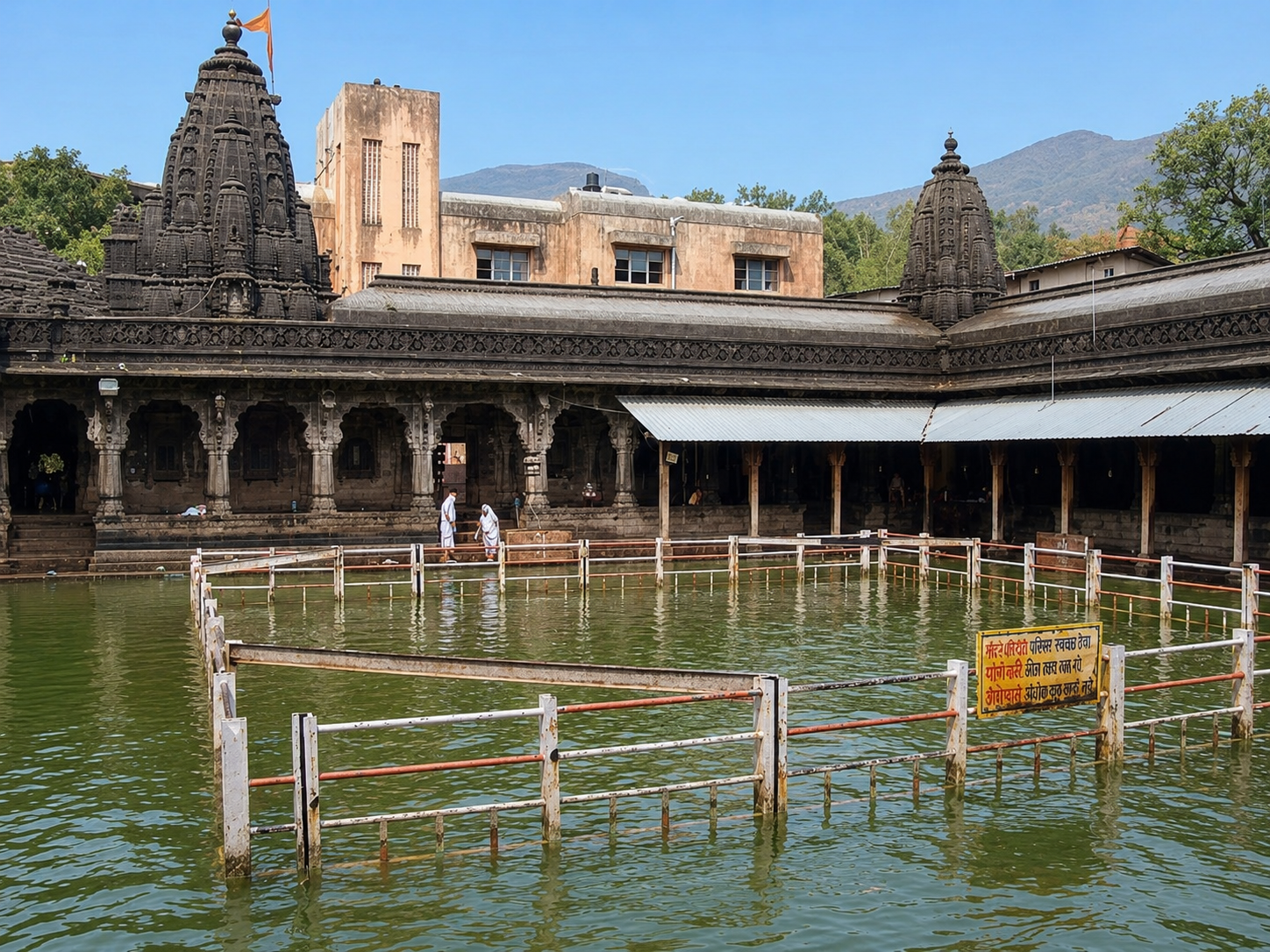
The temple is known for black stone architecture, sacred water
tanks, the origin tradition of the Godavari River, and major ritual
traditions that draw devotees seeking purification, peace, and
Shiva’s grace.
Ritual schedules, Kumbh-period planning, and special puja booking
flows should be rechecked on the date of darshan.
Meaning of Trimbakeshwar
The Three-Eyed Lord Shiva
Tri means three, Ambaka means eyes, Ishwar means Lord, and Trimbakeshwar means the Three-Eyed Lord Shiva.
Tri = ThreeAmbaka = EyesIshwar = LordThree-Eyed Shiva
The Jyotirlinga is unique because it
represents Brahma, Vishnu, and Shiva.
Temple Status
To be verified
Live status and queue
guidance: To be verified
Crowd Expectation
To be verified
Festival, route and
aarti crowd pattern: To be verified
Current crowd estimate: To be verified
Next Aarti
To be verified
Aarti sequence and
reporting window: To be verified
Best Darshan Window
To be verified
Lower-rush darshan window:
To be verified
Verify First
Plan route, queue and temple access first, then lock your darshan
timing.
Today: Crowd, access and route updates: To be verified
Map
Map
Temple Location Snapshot
Near the Brahmagiri Hills in Maharashtra, close to the origin of the sacred Godavari River
Understanding the spiritual importance of Trimbakeshwar Temple
Jyotirlinga No. 8 and the eighth among the 12 Jyotirlingas of Lord Shiva
Located near the Brahmagiri Hills close to the origin of the sacred Godavari River
Known for black stone architecture, sacred water tanks, and Godavari origin tradition
Mainly east-facing and deeply associated with ritual pilgrimage, purification, and Shiva worship
Trimbakeshwar Jyotirlinga Temple is one of the sacred 12
Jyotirlingas of Lord Shiva and is regarded as the eighth
Jyotirlinga. It is located near the Brahmagiri Hills in Maharashtra,
close to the origin of the sacred Godavari River, which is often
called the Ganga of South India.
The temple is famous for black stone architecture, sacred water
tanks, ancient traditions, Godavari origin devotion, and major
ritual importance. The peaceful hills, river, and old pilgrimage
traditions make Trimbakeshwar an important sacred center. The
temple mainly faces east, and east-facing temples are traditionally
considered auspicious because they symbolize purity, positivity, and
divine energy.
Trimbakeshwar Mythology and Gautama Maharishi Legend
Trimbakeshwar’s sacred mythology is tied to sage Gautama Maharishi, Ahilya, the descent of the holy Ganga in the form of the Godavari River, and Shiva’s manifestation as the Trimbakeshwar Jyotirlinga.
According to tradition, Gautama Maharishi prayed to Lord Shiva for purification, and Shiva brought the holy Ganga here as the Godavari River before appearing as the Trimbakeshwar Jyotirlinga.
Sacred legend
According to legend, sage Gautama Maharishi and his wife Ahilya lived near the Brahmagiri Hills and performed severe penance. Their life of devotion became so powerful that other sages grew jealous and falsely accused Gautama of sin.
To purify himself, Gautama prayed deeply to Lord Shiva and requested the holy Ganga to descend on earth. Pleased with his devotion, Shiva brought the sacred river Ganga here in the form of the Godavari River, which is why the river is remembered as especially holy in the Trimbak region.
Lord Shiva then appeared as the Trimbakeshwar Jyotirlinga. Because of this, the temple became one of the holiest Shiva pilgrimage sites in India and remains deeply connected with the Godavari River, Brahmagiri Hills, and ancient sage traditions.
Gautama Maharishi
Penance, accusation and prayer
The sage’s devotion and prayer for purification stand at the center of Trimbakeshwar’s sacred legend.
Godavari descent
Ganga in sacred river form
Tradition holds that Shiva brought the Ganga here in the form of the Godavari River.
Holiest pilgrimage
Shiva appeared as Trimbakeshwar
The Jyotirlinga manifestation made the shrine one of the holiest Shiva pilgrimage sites in India.
Temple History
Trimbakeshwar has long been an important center of Shaivism, river worship, Vedic rituals, and pilgrimage traditions, with a history closely tied to the Godavari River and the sacred geography of Trimbak.
The present temple structure was rebuilt in the 18th century by Nanasaheb Peshwa, and Trimbakeshwar remains one of the sacred places connected with the Kumbh Mela tradition.
Sacred timeline
The present temple structure was rebuilt in the 18th century by Nanasaheb Peshwa. This rebuilding strengthened the shrine’s historic form and helped preserve Trimbakeshwar as one of Maharashtra’s most important Shiva pilgrimage centers.
The temple has long been an important center of Shaivism, river worship, Vedic rituals, and pilgrimage traditions. Its association with the sacred Godavari River and the old Trimbak pilgrimage landscape gives it a long-standing role in devotional practice.
Trimbakeshwar is also one of the sacred places connected with the Kumbh Mela tradition. Together with its ritual heritage and river sanctity, this history helps explain the shrine’s enduring importance in western India.
Historic rebuilding
18th century by Nanasaheb Peshwa
The present structure is traditionally linked with Peshwa-era rebuilding.
Religious importance
Shaivism and Vedic rituals
The shrine is deeply tied to Shiva worship, river devotion, and ritual traditions.
Pilgrimage identity
Kumbh Mela connection
Trimbakeshwar remains one of the sacred places linked with the Kumbh pilgrimage tradition.
Temple Architecture & Design
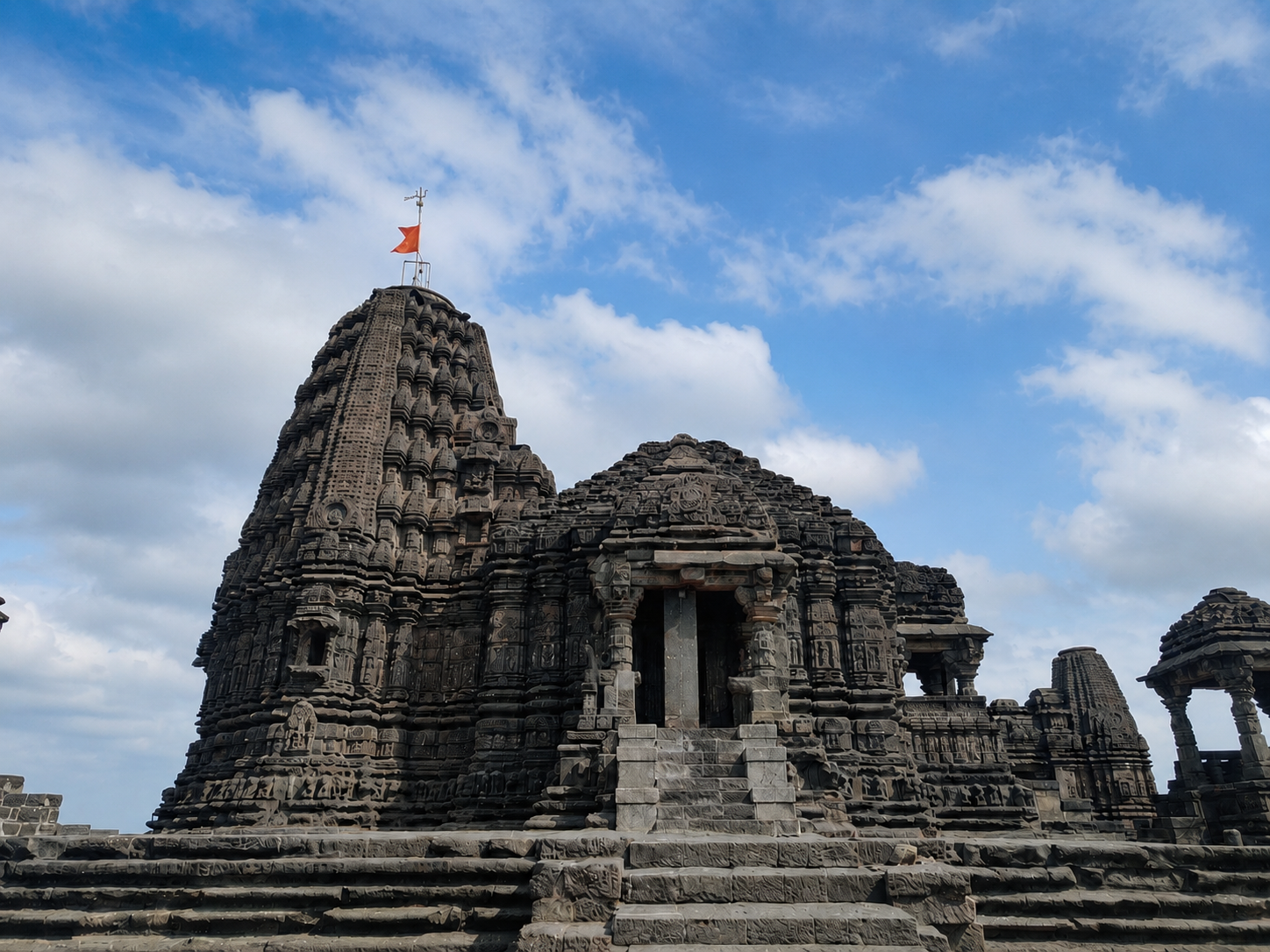
Trimbakeshwar is especially known for black stone Hemadpanthi-style architecture, sacred kunds, carved pillars, and a traditional medieval Maharashtra temple design shaped by devotion and ritual movement.
The temple is famous for beautiful black stone carvings, intricate sculptures and pillars, sacred water tanks, massive walls and gateways, and a gold crown offered to the deity.
Sacred design
Trimbakeshwar reflects black stone Hemadpanthi-style architecture and a traditional medieval Maharashtra temple design. The temple’s form, dark stone surface, and devotional layout make it one of the most recognizable sacred structures in the region.
The complex is known for beautiful black stone carvings, intricate sculptures and pillars, sacred kunds and water tanks, and massive temple walls and gateways that shape the movement of pilgrims through the sacred precinct.
The temple is also associated with a gold crown offered to the deity. Together with the stone structure, ritual spaces, and sacred water traditions, these features give Trimbakeshwar a distinctive architectural identity.
Architecture style
Black stone Hemadpanthi style
The shrine expresses a strong medieval Maharashtra stone-temple identity.
Temple features
Carvings, pillars and sacred kunds
Black stone carvings, intricate pillars, and water tanks define the devotional setting.
Offerings to the deity
Gold crown and ritual adornment
The gold crown tradition remains an important part of the temple’s sacred identity.
Spiritual Importance & Sacred Features
Trimbakeshwar is revered for Godavari River origin devotion, Brahmagiri Hills sacred geography, ritual purification, ancestral-healing worship, and a Jyotirlinga identity linked with Brahma, Vishnu, and Shiva.
Worship at Trimbakeshwar is believed to remove sins, ancestral problems, and planetary doshas, while devotees seek peace, purification, liberation, and blessings from the sacred Godavari River.
Sacred devotion
Worship at Trimbakeshwar is believed to remove sins, ancestral problems, and planetary doshas. Devotees visit for peace, purification, liberation, and blessings from the sacred Godavari River, and the temple is revered as a place of spiritual cleansing and Shiva’s grace.
Trimbakeshwar is also deeply connected with divine unity. The unique three-faced Lingam and the tradition that the Jyotirlinga represents Brahma, Vishnu, and Shiva give the shrine a sacred identity not found at most other Jyotirlinga temples.
The temple is famous for the origin of the Godavari River, the sacred geography of the Brahmagiri Hills, the Kushavarta Kund tradition, the Kumbh Mela connection, and important rituals such as Narayan Nagbali, Kalsarpa Shanti, and Pitru Dosha worship. Exact ritual timings and booking flows should still be verified before travel.
Origin of the sacred Godavari River, often called the Ganga of South India
Brahmagiri Hills sacred geography and ancient sage traditions
Unique three-faced Lingam representing Brahma, Vishnu, and Shiva
Kumbh Mela pilgrimage identity
Narayan Nagbali, Kalsarpa Shanti, and Pitru Dosha ritual traditions
Kushavarta Kund and sacred water tank tradition
Spiritual cleansing, divine unity, and Shiva’s grace
Ritual significance
Narayan Nagbali and dosha remedies
Devotees especially seek rituals for ancestral concerns, planetary doshas, and spiritual purification.
Sacred geography
Godavari, Brahmagiri and Kushavarta
The river, hills, and sacred kunds together define Trimbakeshwar’s pilgrimage atmosphere.
Divine identity
Three-faced Lingam and divine unity
The shrine uniquely represents Brahma, Vishnu, and Shiva within one sacred Jyotirlinga tradition.
Darshan Process
A quick visual flow from entry point to
exit.
Average total time: To be verified
Verify Before Visit
1
Reach Temple Area
Final approach point
and walking path: To be verified.
2
Clear Security
Security checks,
restricted items and entry rules: To be verified.
3
Join Queue Lane
Queue lane and darshan
item guidance: To be verified.
4
Move Final Stretch
Final approach
movement near the shrine: To be verified.
5
Take Darshan
Darshan flow and
movement guidance: To be verified.
Daily crowd
pattern and the best darshan window should be verified before
travel.
Verify Before Visit
Current schedule details
should be verified.
Temple StatusTo be verifiedLive status and current
timing guidance: To be verified.
Today's
TimingTo be verified
Next AartiTo be verifiedTo be verifiedBest Darshan WindowTo be verifiedLower-rush darshan window: To be verifiedCrowd ExpectationTo be verifiedTo be verifiedTemple
ClosesTo be verifiedListed daily
closing time
General darshan timing, special puja
booking, aarti access and reporting guidance should be verified before
travel. Trimbakeshwar is especially known for Narayan Nagbali,
Kalsarpa Shanti, and Pitru Dosha rituals.
Verify Before Visit
Aarti attendance, special puja
booking, Kumbh-period planning and ritual reporting details should be
verified through temple channels before travel.
Early-morning access
Aarti attendance details
Current access, reporting and aarti details should be
verified before travel.
BookingBooking process: To be verified
Timing noteReporting time: To be verified
Advance suggestionAdvance booking advice: To be verified
Most common ritual
booking
Kalsarpa Shanti
Kalsarpa Shanti booking, reporting and ritual details
should be verified before travel.
BookingBooking process: To be verified
Timing noteTiming note: To be verified
Advance suggestionAdvance suggestion: To be verified
Special ritual planning
Narayan Nagbali Puja
Narayan Nagbali Puja booking, reporting and ritual
details should be verified before travel.
BookingBooking process: To be verified
Timing noteTiming note: To be verified
Advance suggestionAdvance suggestion: To be verified
Ancestral ritual planning
Pitru Dosha rituals
Pitru Dosha ritual booking, priest coordination,
and access procedure details should be verified before
travel.
BookingBooking process: To be verified
Timing noteTiming note: To be verified
Advance suggestionAdvance suggestion: To be verified
Traditional offerings at Trimbakeshwar Temple
are simple, devotional and
closely tied to Shiva worship, with puja essentials and sacred rituals
usually arranged through trusted local vendors or approved temple
channels.
Flowers, bel patra and simple Shiva
puja items remain the most familiar offerings for devotees visiting
Trimbak.
Flowers
Fresh flowers are among the most common devotional
offerings for Lord Shiva and are easily available
through trusted local vendors near the temple
approach.
Bel Patra
Bel patra remains one of the most symbolically
important
offerings in Shiva worship and is often part of
simple,
focused puja at Trimbak.
Milk Abhishek
Milk-based abhishek offerings are widely associated
with
Shiva worship. Devotees should follow current temple
rules and approved puja procedures before bringing
items
inside.
Special puja
Special puja is one of the most sought-after temple
rituals for devotees seeking a deeper spiritual
offering
experience at Trimbak.
Offering Preview
Active offering
Flowers
Active offering
Bel Patra
Active offering
Milk Abhishek
Active offering
Special puja
Before You Visit (Important Tips)
Short reminders that help avoid confusion
and keep darshan smoother.
Avoid These Mistakes
Don't
carry mobile inside temple: To be verified.
Don't
come late for aarti slots: To be verified.
Avoid
peak hours if possible: To be verified.
Helpful Tips for Smooth Darshan
Reach
early morning for smooth darshan: To be verified.
Keep
offerings ready before entry: To be verified.
Follow
local queue instructions: To be verified.
Before You Visit
A little planning before you leave for the
temple usually makes the
darshan experience calmer, especially when route access, entry movement and ritual access need verification.
Arrival checklist
Prepare these basics before entering the temple zone
Carry minimal
essentials so security checks and deposit needs stay
manageable: To be verified.
Confirm the
latest darshan or aarti timing before you leave for
the temple: To be verified.
Festival-day
arrival guidance: To be verified.
Keep extra
buffer time for queue movement, checkpoints and
final approach access: To be verified.
Use
comfortable footwear for the walking approach and
city lanes: To be verified.
Keep booking
confirmation and ID guidance for ritual access: To
be verified.
Planning note
Plan for the full arrival flow, not just temple
timings
Travel time, route, security checks and final entry movement
should be verified before travel.
Dress Code & Allowed Items
Dress code, allowed items and deposit rules
should be verified before travel.
Dress guidance, item rules and
carrying restrictions should be verified before travel.
Clothing
Dress guidance: To be verified
Dress code and temple-appropriate clothing guidance
should be verified before travel.
Dress guidance:
To be verified.
Footwear
and waiting-area guidance: To be
verified.
Restricted items
Check the current rules before you carry extras
Bag, phone, electronics and deposit rules should be
verified before travel.
Bag, phone,
electronics and leather-item rules: To be
verified.
Security and
deposit procedures: To be verified.
Offerings
Keep puja items simple and temple-appropriate
Offering-entry guidance and current item expectations
should be verified before travel.
Offering guidance:
To be verified.
Special
ritual item guidance: To be verified.
Accommodation Near Temple
Where you stay affects how easy an early
darshan day feels, especially
when route access and transfer timing become part of the plan.
Staying near the temple precinct or a
practical transfer point usually makes early darshan planning much
smoother than depending on long city transfers.
Best area to stay
Choose a base that supports your darshan timing
If temple access is the priority, stay in an area that
keeps
the morning approach manageable instead of adding a long
transfer before the queue.
Temple precinct or local approach zone
Useful for temple-side access
Staying near the temple-side approach can
make
it easier to combine darshan, local movement and a
nearby stop
visit in one day.
Near railway station
Practical for shorter trips and easier transfers
This area can work better for visitors arriving by train,
carrying luggage or prioritizing simpler onward travel
over
walkable local access.
Budget and comfort
Balance price, access and early-start convenience
Budget stays can work well if access is clear, while
comfort
stays are often worth considering when your visit
depends on
rest, early reporting or family travel.
Convenience note
Remote stays can be scenic but slower for arrival
Staying too far from the temple approach may feel convenient for some routes,
but it can complicate luggage movement, auto drop-offs and very
early temple starts.
Official Info & Booking Help
Use official confirmation for ritual
planning whenever your visit depends
on a specific booking, reporting time or access rule.
Use official sources first whenever
your visit depends on a puja slot, reporting window or paid ritual
booking.
Where to confirm
Start with official sources
For puja access, timing changes and reporting
instructions,
official guidance should be your first reference point.
Temple sourceCheck official
temple
source
Booking accessConfirm from
official booking portal
Special pujasUse official
helpdesk
guidance for ritual-specific support
Before you depend on a
booking
Verify the process before you travel
Reporting windows, entry rules and ritual availability
can
shift, so final confirmation matters even after you plan
the
trip.
Ritual processConfirm the
latest
booking method from the official source
Reporting timeCheck the current
reporting window before reaching the
temple
Third-party cautionAvoid
relying
only on unverified third-party booking
claims
Trust reminder
Use verified guidance when the visit depends on a paid
ritual
If your darshan day depends on a specific aarti or puja slot,
re-check official instructions shortly before travel rather than
depending only on older summaries or unofficial listings.
Temple Location
Use this location snapshot for last-mile
planning around the temple precinct, the Godavari origin region, and your
arrival point.
CityTrimbak
StateMaharashtra
WaterbodyGodavari River
FacingEast
LandmarkKushavarta Kund near Brahmagiri Hills
Railway StationNashik rail access: To be verified
AirportNearest airport transfer: To be verified
AccessTemple access, route and final entry sequence: To be verified.
Live Darshan Preview
Internal live accessOpen Divine Temple Guide live darshan for the active viewing
route.
Live darshan access
Live Temple Darshan
This sidebar card keeps live darshan discoverable on the temple page
while routing viewing access through the Divine Temple Guide live section.
Use the internal
live-darshan page for the next step.
Official sources list Kakad Aarti at 5:30 AM, Morning Puja at 7:00 AM - 8:30 AM,
Mid-Day Puja at 10:45 AM - 12:30 PM, and Shejarati at 9:00 PM.
Evening Puja timing should be verified before travel because the current official listings do not align cleanly.
Seasonal comfort, crowd levels and preferred darshan window
should be verified before travel.
Dress code, attire guidance and item rules should be verified
before travel.
Entry sequence, security rules, phone policy and allowed items should be verified before travel.
Aarti attendance, access procedure and any booking requirement should be verified before travel.
Mobile phone and electronic item rules should be verified before travel.
Locker or deposit facility availability should be verified before travel.
Darshan duration depends on crowd and queue flow and should be verified before travel.
Online pooja booking availability and process should be verified before travel.